The Women Who Carve Sacred Mirrors into Cloth
In the remote rural tandas of the Deccan and Thar, the Banjara (Lambada) matriarchs carry the world’s most intricate needlecraft in their fingertips. Here is their story.
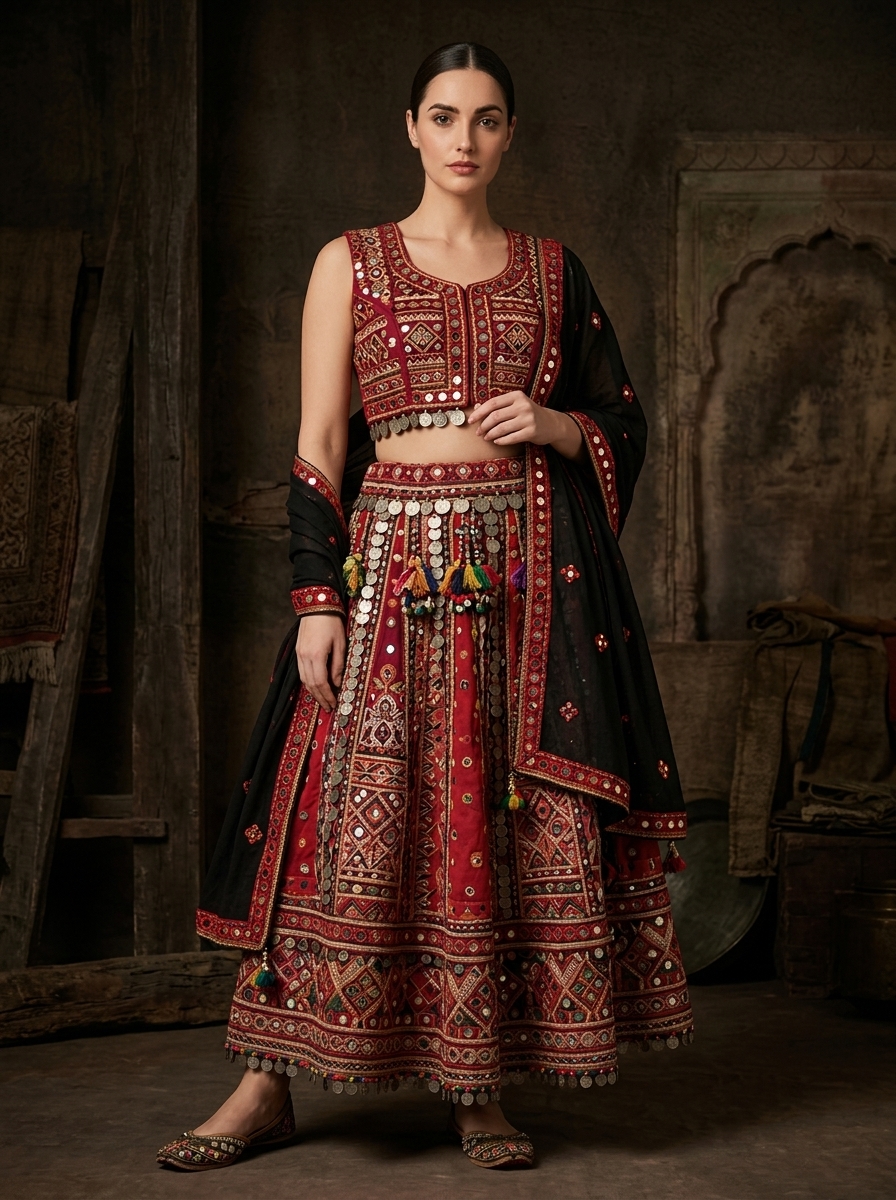
"Our ancestors had no books, no written language. When a daughter was born, her mother began embroidering her chaniya choli. Our stories, our rivers, and our blessings are all sewn in these mirrors."
The Meaning of Abhla Bharat (Mirror Embroidery)
Centuries ago, as nomadic caravans traversed the harsh sunbaked terrains of India, mirrors were not merely ornamental. In Banjara folklore, reflective glass mirrors were believed to ward off evil eyes (Drishti) and deflect harsh midday heat.
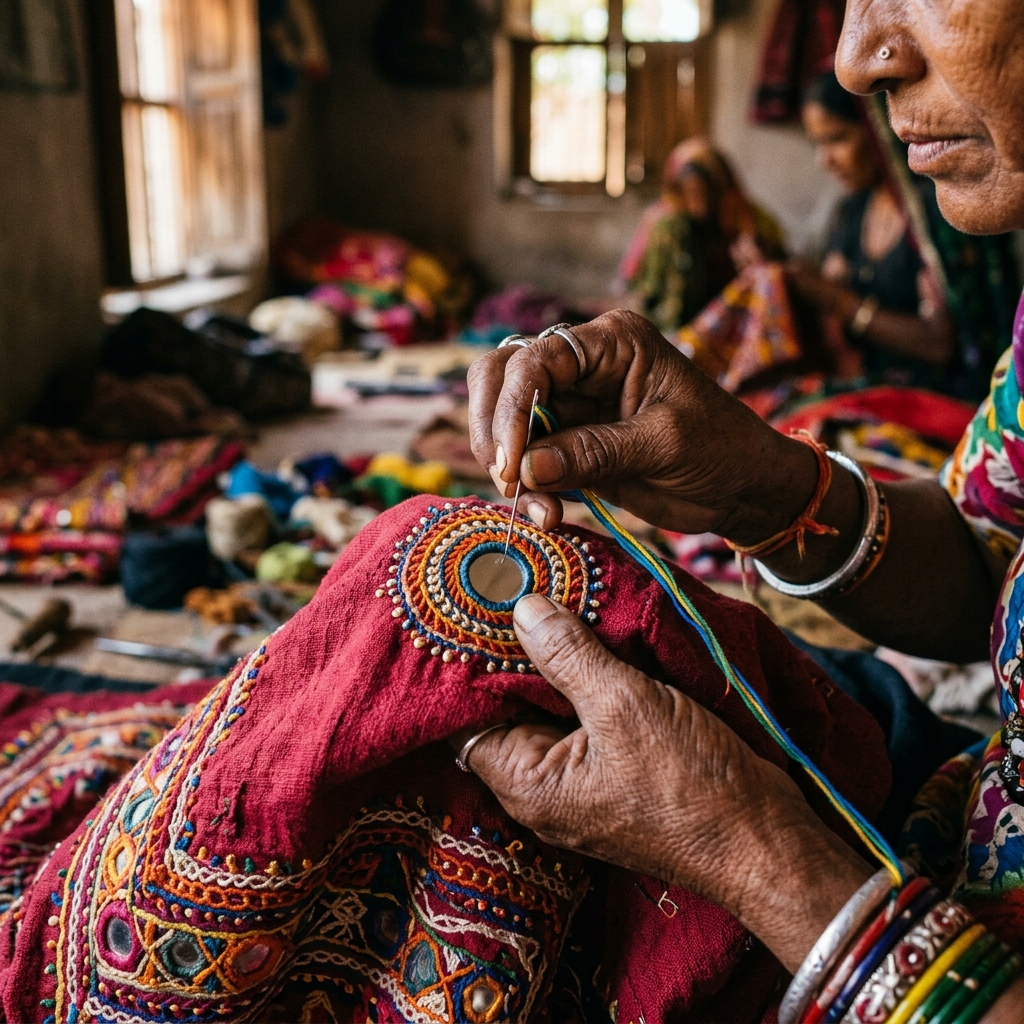
Unlike modern synthetic garments that use plastic discs stuck with chemical adhesives, authentic Banjara Abhla work uses pure convex glass mirrors, hand-cut and anchored solely through tensioned thread geometries like herringbone, chain stitch, and chevron knotting.
Why Direct Fair-Trade Pre-Orders Matter
Fast fashion often exploits rural artisans with exploitative middleman commissions. Kesula operates on a direct collective model.
Financial Independence
100% of stitching wages are deposited directly to women’s cooperative bank accounts, enabling education for their daughters.
Zero Factory Waste
Through our pre-booking system, we only craft what is requested, saving hundreds of meters of handspun khadi and natural dyes.
Heirloom Preservation
Younger women in the tandas are learning the 14 sacred Banjara stitches, keeping this ancient intangible art alive.